
Team
STIW Lab at University of Pittsburgh
Designed For
Allegheny County residents seeking clear, accessible guidance through the police misconduct complaint process.
Timeline
1 Year 4 Months | April 2024 - August 2025
My Role
Led design probes, qualitative research, user testing, analysis, and synthesis into design implications.
Tools + Technologies
Zoom, Excel, Miro, Overleaf, Figma
Problem
Community members face barriers to filing police misconduct complaints, which prevents accountability.

A fragmented complaint process causes users to lose confidence and abandon the system.
Solution
Civic complaint systems build trust only when users understand the process, see progress, and feel protected.
Guided, Multi-Channel Access
Complaint systems should support multiple entry points, digital, in-person, phone, and community-mediated, so users are not excluded by language, technology, or trust barriers.

Protective Pathways for Vulnerable Users
Advocate-led and escrow-based submission models can help users participate safely while preserving accountability and follow-through.

Layered Transparency & Progress Visibility
Users need visibility into what happens after a complaint is submitted, with progress shared at appropriate levels to sustain trust without increasing risk.
Design Probe
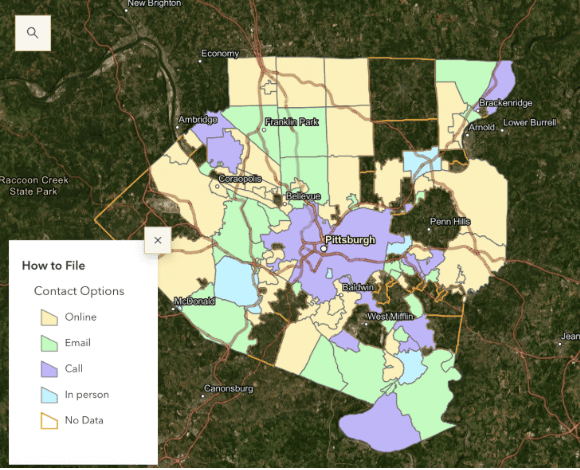
Conduct a design probe with an interactive StoryMap implemented using ArcGIS StoryMaps


Qualitative Research
Lack of accessibility and safety, prevents users from filing complaints
Through qualitative research, we identified key barriers that users face in navigating the police misconduct complaint process.
Pre and Post-Intervention Questions
Pre-Intervention Questions
Post-Intervention Questions
User Interviews
Conducted interviews with individuals who either attempted to file complaints or wanted to. Participants were recruited between July 2024 and April 2025.

Table 1. Participant Pseudonyms and Their Relation to Law Enforcement

Thematic Analysis
Analyzed the interview data to identify recurring themes and user needs.

Key Pain Points:

Prototype & Iteration
Insights from community research were mapped to system-level design decisions, helping translate qualitative findings into actionable product requirements.

Setbacks

Main Insight
Lack of clarity, safety, and support discourages community reporting
Interviews revealed that unclear instructions, safety concerns, and limited support resources create major barriers for residents navigating the complaint process, reducing willingness to report misconduct.
Perceived Impact
Community members can more easily understand and navigate the police misconduct complaint process through clearer, more accessible, and trust-aware information design.
Next Steps
This work culminated in a full draft of a research paper currently being prepared for submission to CHI 2026!
Lessons Learned

Acknowledgments
This research was supported by the STIW Lab (Socio-Technical Systems in an Interdependent World) and the Graduate School of Public and International Affairs (GSPIA) at the University of Pittsburgh. I am especially grateful to my advisor, Dr. Aakash Gautam, for his guidance and support. I also appreciate the involvement of CAASI and the contributions of the students who collaborated during the summer and fall.
