
Team
12 graduate students overall; 3 designers on the refinement use case, led by Professor Dan Saffer.
Designed For
Designers and product managers iterating with LLMs in creative and productivity workflows.
Timeline
6 Months | August 2025 - January 2026
My Role
Led a team of 3 designers, guiding prototyping and iteration of user refinement workflows.
Tools + Technologies
Figma, Design Systems, Maze, usability testing, ACM Digital Library, literature review, Slack, Medium (process write-ups and project updates)
Problem
AI tools are great at generating a first draft but bad at helping users refine it.
How might we enable users to refine AI-generated content at multiple levels of depth, without losing structure, intent, or control?

Solution
Detailed Editing
Targeted, in-line refinement for precise edits without affecting surrounding content.

Overall Refinement
Enables fast, high-level iteration when users want to reshape an entire AI-generated response.

Version History & Comparison
A tool for reviewing and selecting between multiple refined outputs.

Research & Opportunity Framing
We examined both academic research and existing AI tools to understand how refinement, control, and trust are currently handled in generative interfaces.
Photoshop Generative Fill


SpecifyUI

Design Principles

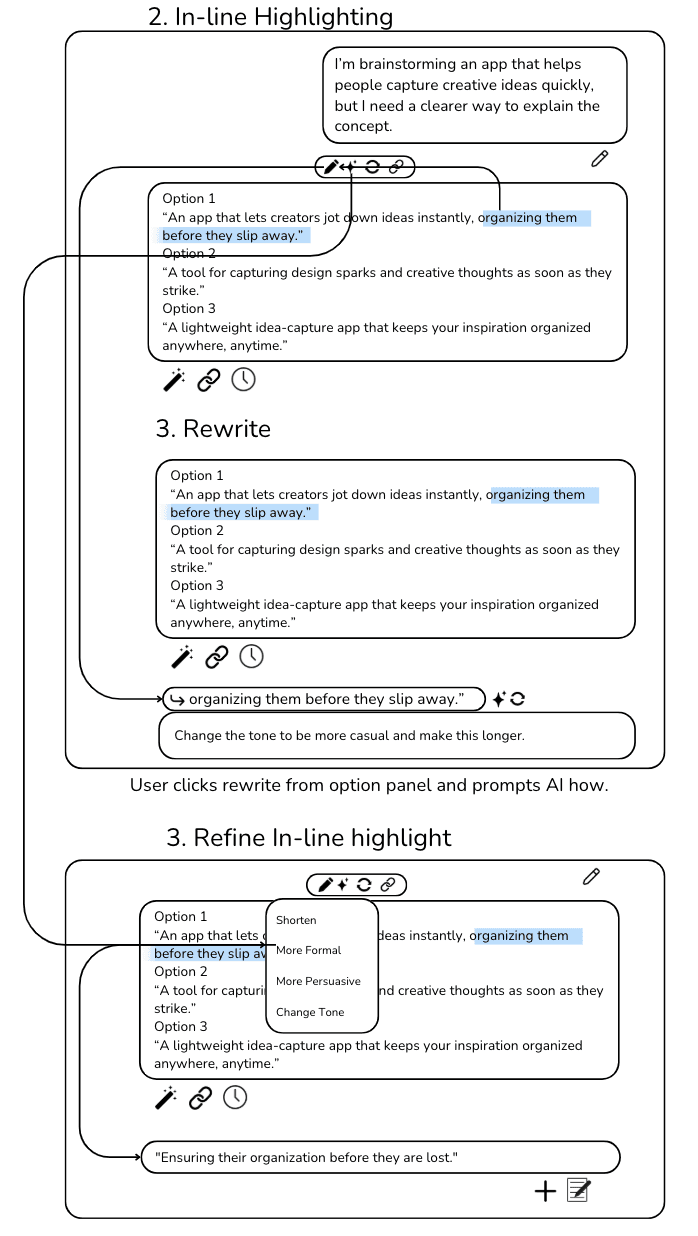
Concept Sketching & Peer Critique
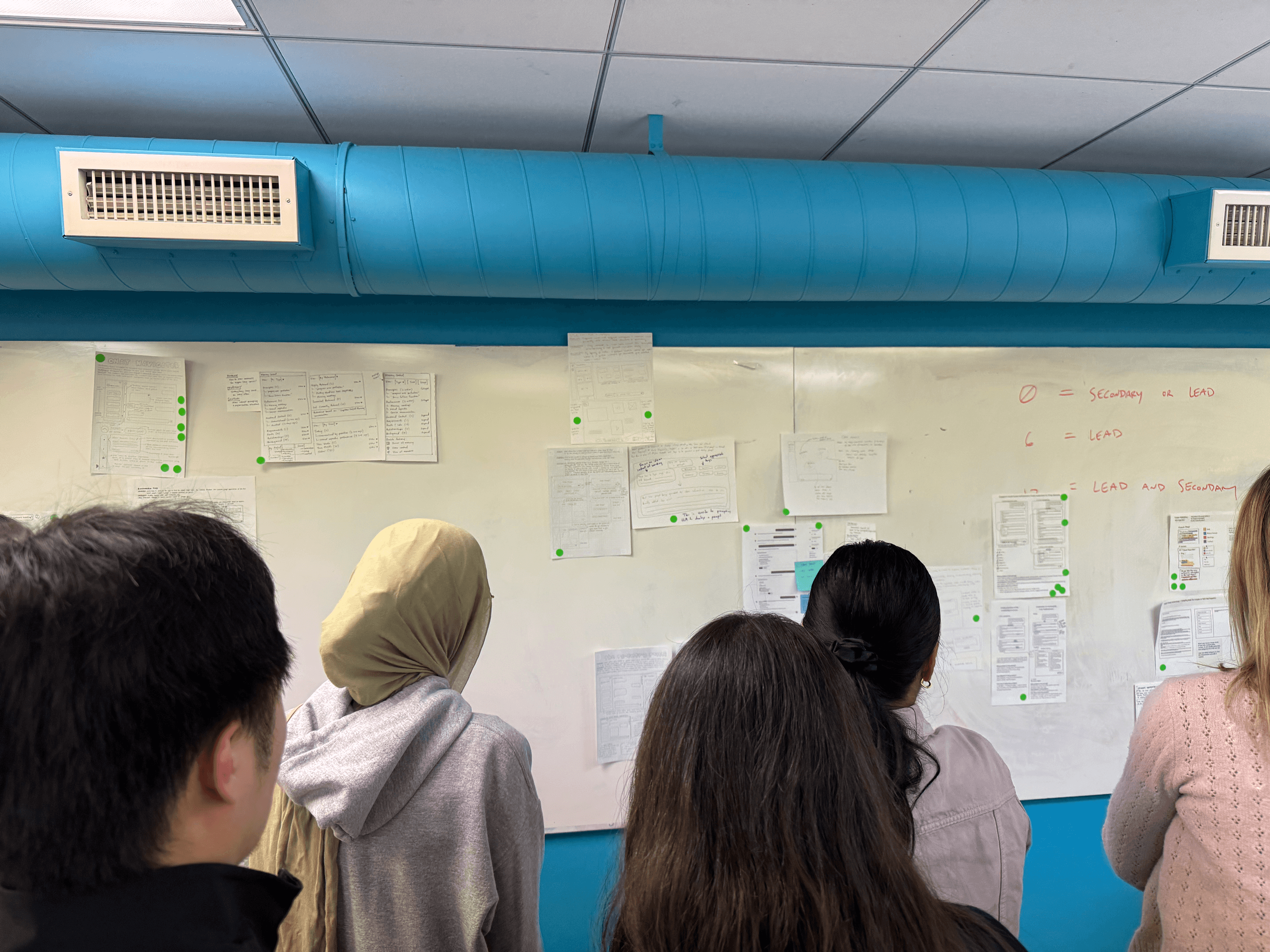
We used early sketches and peer critique to explore multiple interaction models before committing to a single refinement approach.


The team selected my concept as the primary direction because it reduced cognitive load and made refinement actions visible without requiring users to rewrite prompts or switch contexts.

Lo-Fi Prototypes
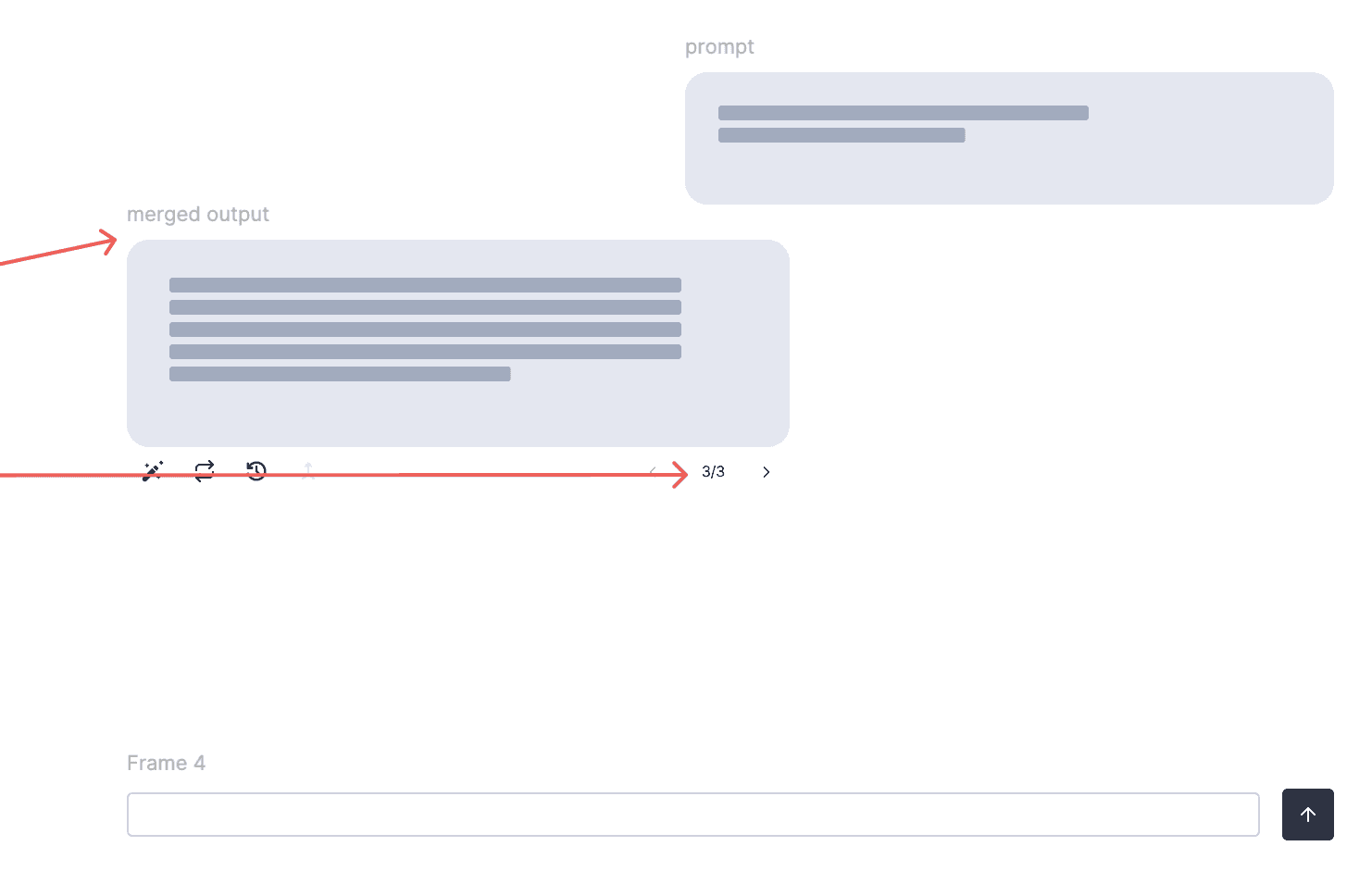
We created low-fidelity prototypes to explore core refinement interactions and prepare them for early user testing.


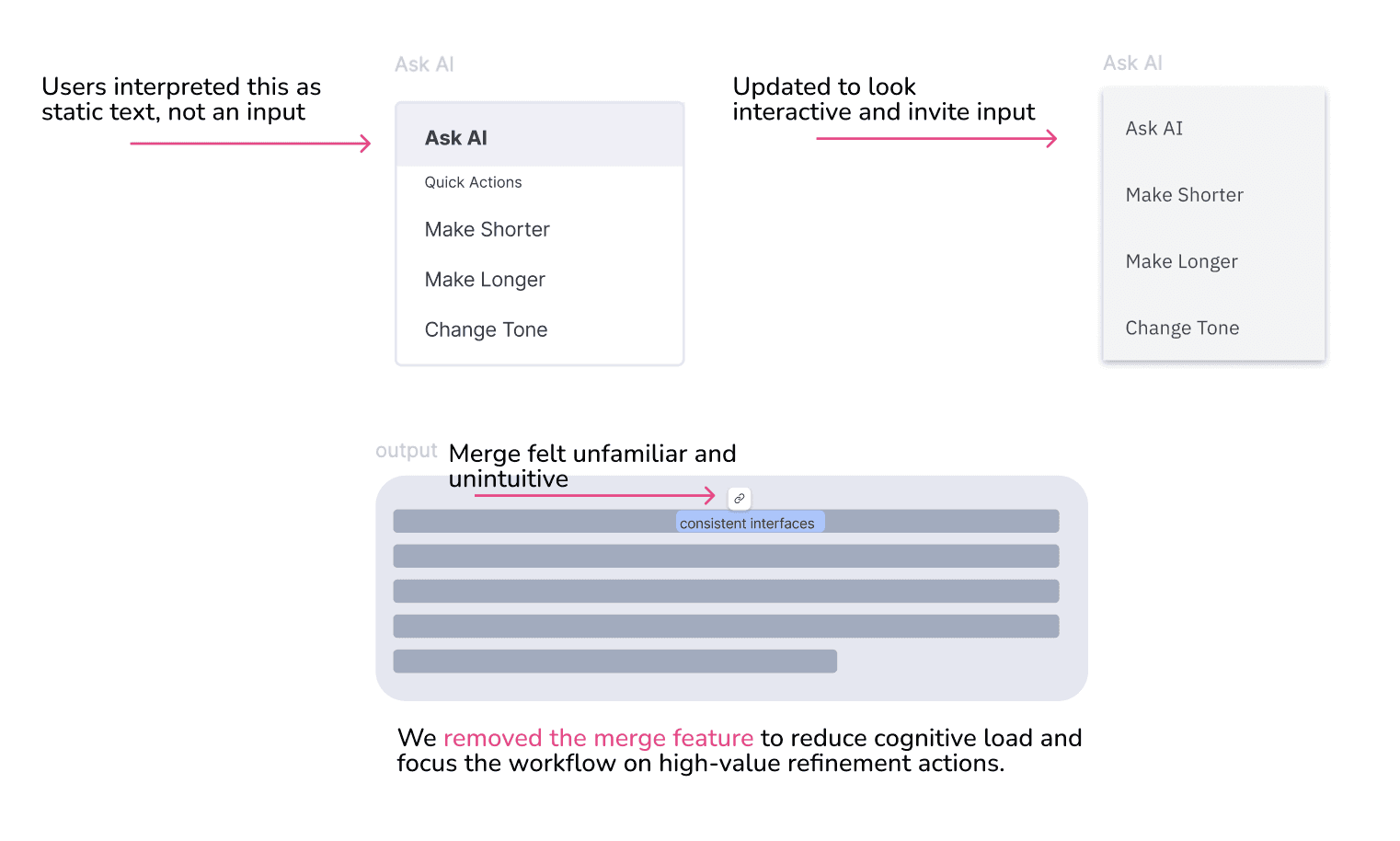
User Testing Round 1
Methods
Task-based, think-aloud testing
Tested overall refinement, detailed editing, merge, and version history
Hi-Fi Prototype Iteration
We translated Round 1 insights into a high-fidelity prototype that clarified interactions, reduced ambiguity, and streamlined the refinement workflow. I mainly focused on the detailed editing flow.
Detailed editing Make Shorter:

Detailed editing Ask AI:

User Testing & Measuring Impact Round 2
Used task-based flows in Maze to measure user efficiency, error rates, and overall satisfaction, quantifying the impact of our refinements.


We repositioned the side-by-side toggle next to version navigation to improve discoverability.

Final Design

Main Insight
Designing for precision, visibility, and control turns AI into a true collaborative partner.
Perceived Impact
Designers, students, and product teams could iterate more effectively with LLMs by treating AI output as a collaborative, multi‑level process, enabling users to refine content with precision and control.
Next Steps
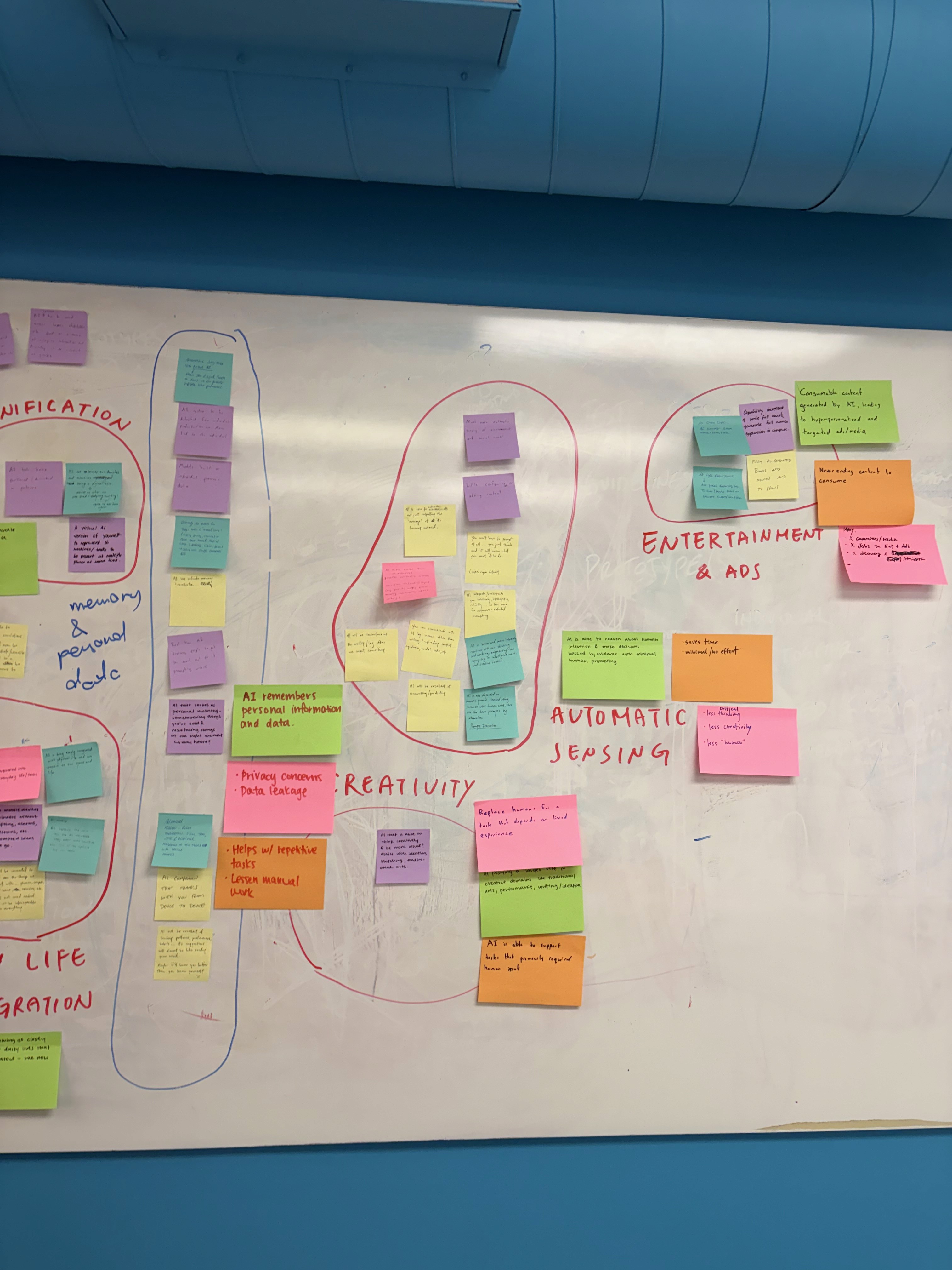
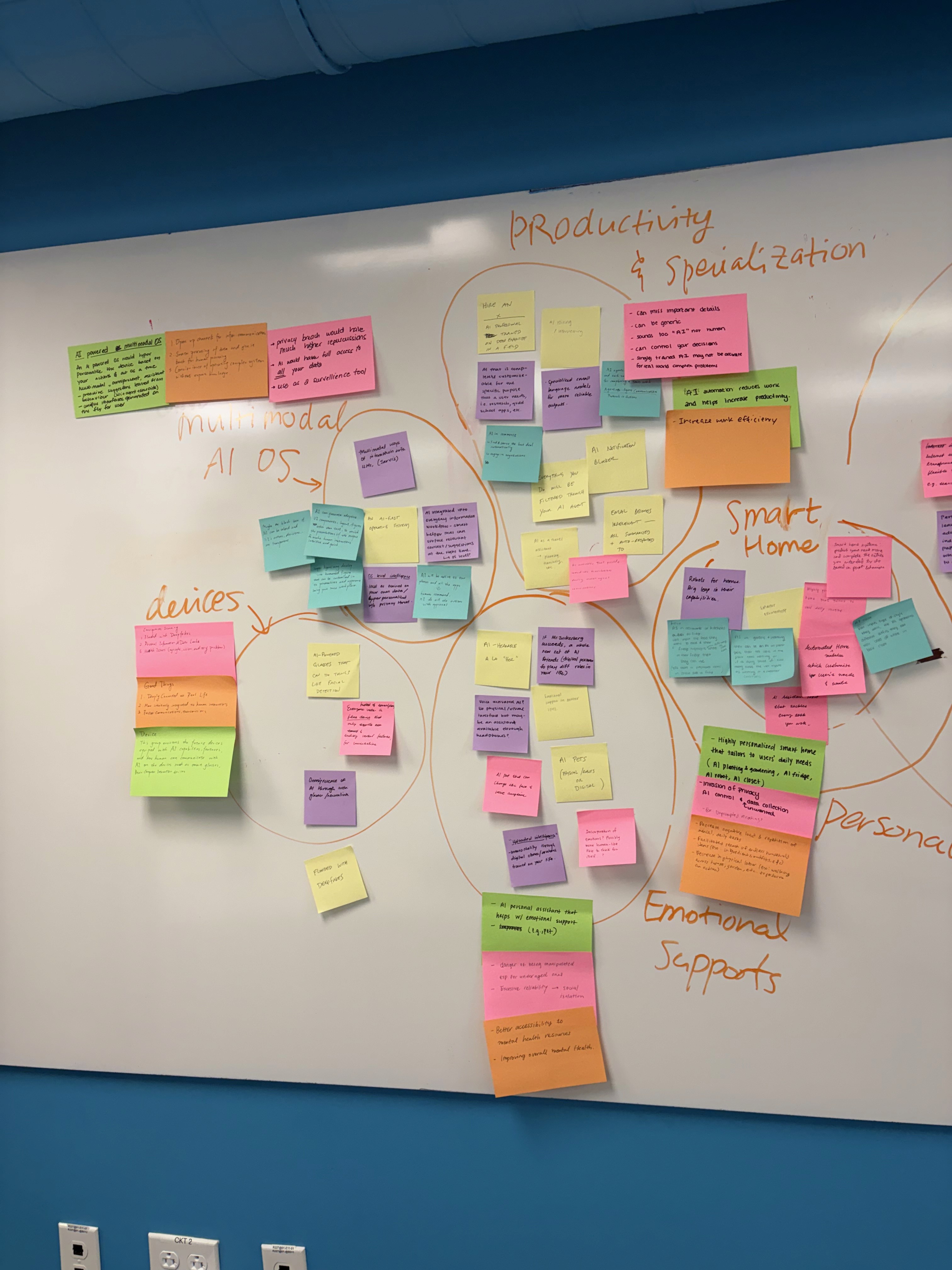
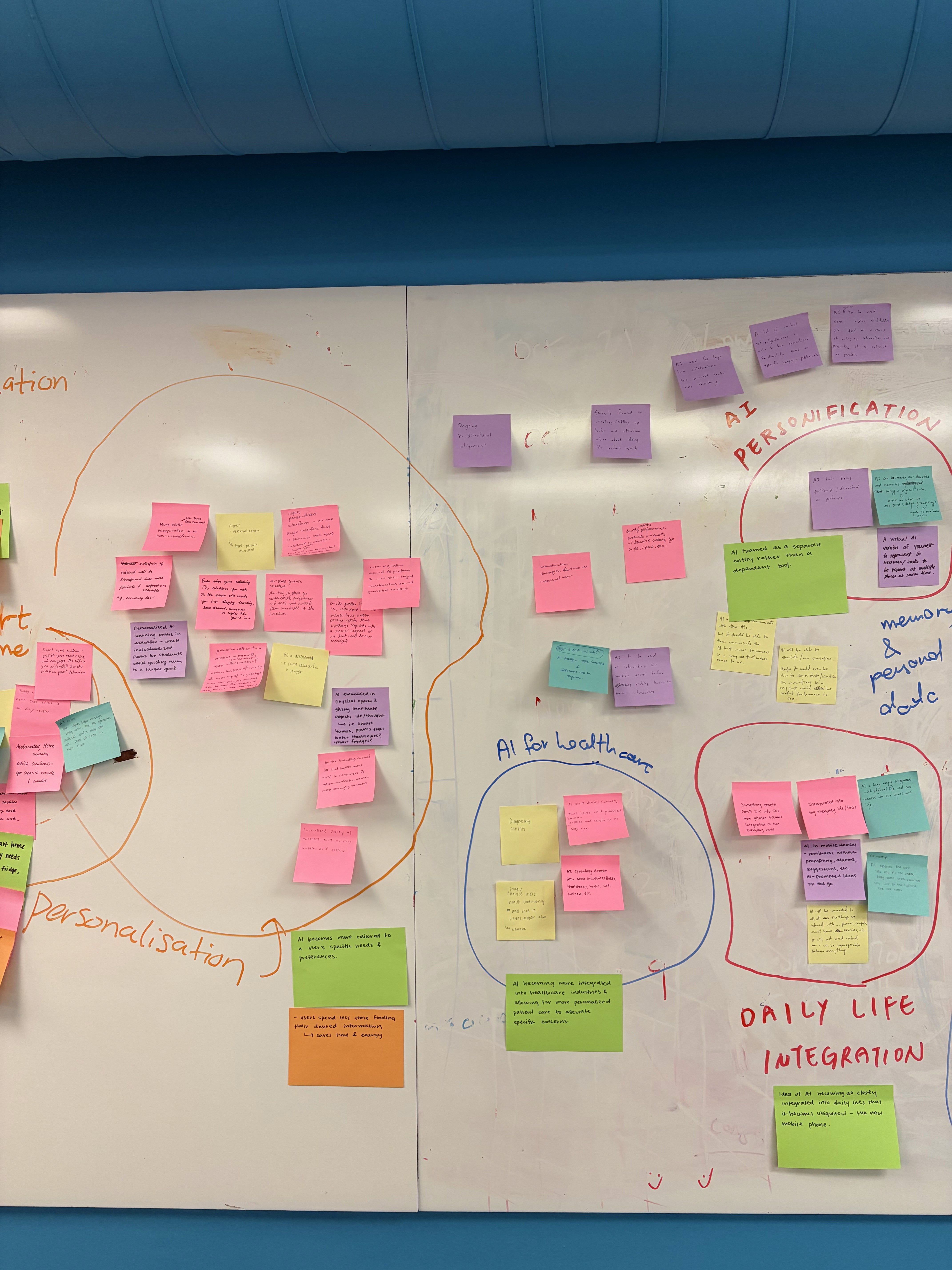
We are exploring how AI may evolve over the next 3-10 years and using those forecasts to inform which concepts are worth designing next.


Lessons Learned
What I'd do Differently

Acknowledgements
This project was completed as part of the UI for AI independent study, led by Professor Dan Saffer, in collaboration with fellow graduate designers and researchers.
